

Müşterek-ül Menfaa İnhisarı Duhanı
Devlet-i Aliye-i Osmaniye
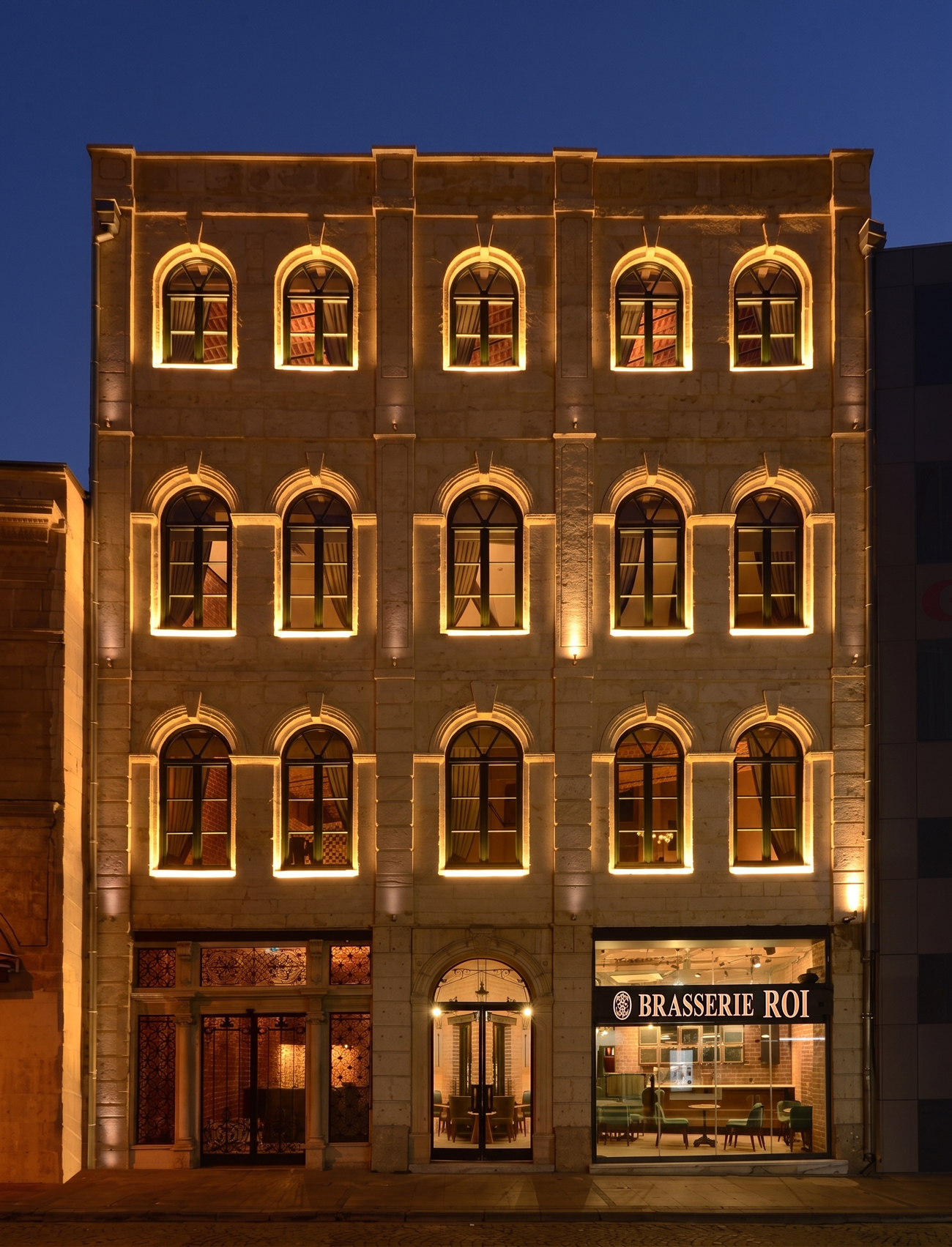
A luxury Boutique Hotel in Old City of Istanbul
Welcome to Regie Ottoman Hotel,
where Istanbul's historic fabric and rich culture
meet comfort and modernity.
Istanbul; the favorite city of the 21st century where you can go from Europe to Asia whenever you want, find the traces of Ottoman and Byzantine history any time you wish; a city that brings the past into present.
Our top boutique hotel is ideally located in Sirkeci, a quarter in the Eminönü neighborhood of the Fatih district of the city of Istanbul, Turkey. The neighborhood borders to the North the mouth of the Golden Horn, to the East the Topkapi Palace area and to the South the Cağaloğlu neighborhood. Sirkeci hosts Sirkeci Station. Sirkeci consists mostly of commercial and tourist oriented uses. A combination of small shops, hans (larger workshops), offices, boutique hotels, traditional Turkish restaurants, Turkish and bookstores.
During your visit to Istanbul and stay at Regie Ottoman Hotel, you will be able to reach the historical texture more easily and comfortably by staying at the Historical Peninsula and get the chance to feel the spirit by living in history.
History
Memalik-i Şahane Duhanları Müşterekül Menfaa Reji Şirketi or "Reji" in short, was a private profit-sharing company with monopoly prerogatives in tobacco trade, founded by a contract dated May 27th, 1883 following the conclusion of negotiations between the Ottoman Empire, Public Debts Administration and three banking groups; Die Österreichische Kreditanstalt - Vienna, Banker S. Bleichröder - Berlin, and Bank-ı Osmani-i Şahane - Istanbul.
After the Ottoman Empire announced it was unable to pay its debts on time as a result of the domestic and foreign borrowing period that began with the Crimean War in 1875, creditor countries demonstrated a strong reaction against the Ottomans and did not accept its payment schedule. Having a distrust also in the Ottoman finance system, the creditor countries wanted to obtain taxes collected in the country via Düyun-u Umumiye (Public Debts Administration), an organization they established here. The taxes would not anymore be collected by the Ottoman officers, but by Regie officers of the company founded by creditors.
Consequently, taxes collected from tobacco, salt, and liquor -the most important source of income for the Ottoman State- were left to the Regie company founded by creditors for 30 years. The Regie Administration began collecting taxes with its own officers and armed guards, which were deducted from the Ottomans' debt.
Ottoman producers were forced to give all the tobacco, salt, and liquor they produced to Regie Company, at a price set by the Regie. After a while, the villagers could not even keep some tobacco for smoking; they had to sell it to the Regie for 3 kuruses and then buy it back for 10. The administration of Ottoman tobacco, transferred to Regie Company from the Public Debts Administration which was founded to directly pay off Ottoman debts with taxes collected from the public, is interpreted as an interesting model of privatization based on foreign capital. The founding foreign capital sources are of Austrian, German, British, and French origin, each of which is owned or partnered by the Rothschild Family.
Duration for the initial Regie Company contract was 30 years. According to the contract, Ottoman Courts were authorized for resolution of legal and business issues that may arise regarding the company.
It was stipulated that tobacco producers must obtain license from the Regie and sell their products only to Regie. Unable to find any other buyers, the producers were compelled to sell their tobacco at a price way below its true value. Illegal production and sale became widespread. In 1911, it was agreed that the Regie Company would be dissolved and a seven-year "State Monopoly" would be established. And a "Tobacco Monopoly" bill was prepared in 1912. However, due to the outbreak of the Turco-Italian War and Balkan Wars and following financial difficulties, prerogatives for the company were extended for another 15 years on condition of a loan of 1,500,000 Ottoman Liras from the Regie Company to Ottoman Empire.
The Regie Company was abolished on February 6th, 1925. The Regie was acquired by Turkish state from the French on March 1st, 1925 and all rights and obligations were transferred to the state. The Law on Tobacco Inspection Agency and Cigarette Paper Monopoly dated 26/11/1925 and numbered 558 entered into force afterwards.